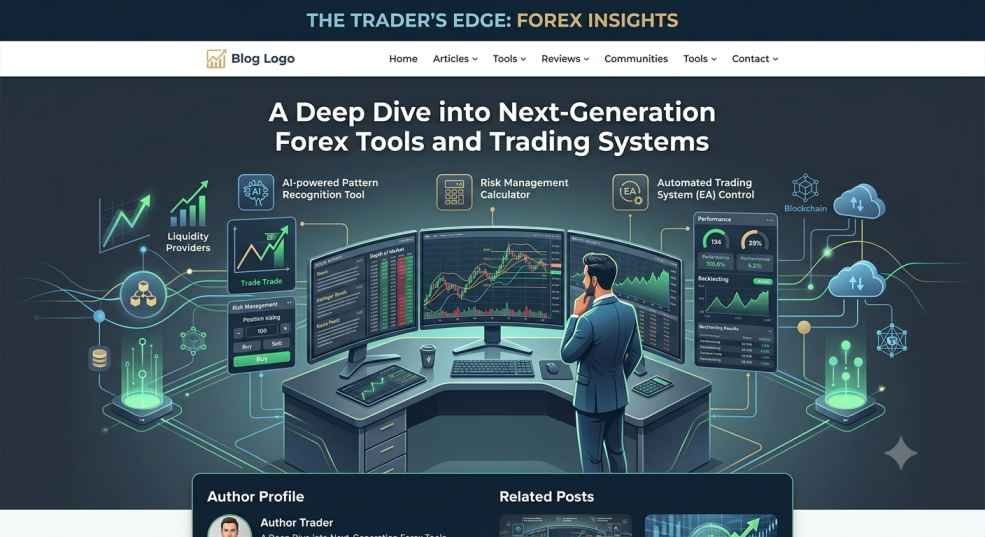
Navigating the financial markets requires more than just intuition and technical chart reading—it demands lightning-fast execution, robust analytical indicators, and disciplined trade management. Platforms like TickPips have emerged to address these exact demands, offering retail and institutional traders specialized tools designed to streamline strategy execution and maximize market edge.
Whether you are seeking custom technical indicators, expert advisors (EAs), or comprehensive trade management frameworks, understanding how modern trading hubs operate can significantly elevate your trading outcomes.
The Evolution of Automated and Signal-Based Trading
In volatile markets such as Forex, indices, and commodities, timing is everything. A fraction of a second or a few pips can mean the difference between a high-yield trade and an early stop-out.
Modern trading suites focus on three core pillars:
Precision Signal Generation: Identifying high-probability entry and exit zones using multi-timeframe analysis and advanced technical indicators (e.g., trend strength, order flow, and volatility channels).
- Automated Trade Execution: Utilizing Expert Advisors (EAs) to remove emotional bias, automate position sizing, and trigger orders instantly when criteria are met.
- Dynamic Risk & Trade Management: Implementing trailing stops, partial profit taking, and account-level risk limits to safeguard capital.
Key Features to Look for in a Trading Ecosystem
When evaluating platforms like TickPips, traders should look for tools that directly solve common operational challenges:
1. Clear, Non-Repainting Technical Indicators
Many standard indicators alter past signals after a candle closes, creating a false impression of historical accuracy. High-performance trading systems provide non-repainting signals, allowing traders to perform honest backtesting and forward testing without unexpected visual shifting.
2. Multi-Asset Compatibility
Top-tier trading tools are designed to work across diverse financial instruments—from major Forex pairs (,
) to stock indices, gold, and cryptocurrencies. Versatile systems adapt to varying volatility profiles without requiring complete strategy overhauls.
3. Integrated Risk & Money Management
Position sizing should never be a guess. Built-in tools that calculate precise lot sizes based on account balance percentage, stop-loss distance, and risk tolerance are essential for maintaining long-term profitability and passing prop firm evaluation challenges.
How to Maximize Your Edge with Trading Tools
To get the most value out of any professional trading toolkit:
- Always Backtest & Demo Test: Before deploying custom indicators or automated EAs on a live account, test them on historical data and live demo accounts across multiple market conditions (trending, range-bound, and high-news volatility).
- Combine Tools with Market Context: Indicators and algorithms are best used as confirmation tools within a broader market context (e.g., key support/resistance levels, market sessions, and macro news releases).
- Maintain Strict Risk Rules: No tool or signal provider guarantees 100% win rates. Consistently risking no more than 1% to 2% per trade ensures that your account survives inevitable drawdowns.
Final Thoughts
The gap between retail traders and institutional execution is narrower than ever thanks to dedicated software suites and automated systems. Tools provided by services like TickPips empower traders to analyze price action accurately, manage risk effortlessly, and execute strategies with confidence.