

If you’ve ever wondered how cryptocurrencies actually work or what makes blockchain so powerful, you’re not alone. The crypto world often sounds complicated: block rewards, mining, nodes, smart contracts, but once you break it down, it becomes surprisingly logical.
In this article, you’ll understand how blockchain works, how crypto markets operate, and why millions of people trust digital currencies with real money.
What Exactly Is Blockchain? (In Simple Words)
Imagine you and a friend keep a shared notebook. Every time one of you spends or receives money, you note it down. But here’s the twist:
- You both have copies of the notebook
- You both verify each entry
- No one can erase or change a past entry
- And the notebook keeps getting longer
That notebook is the blockchain.
It’s a digital ledger, public, transparent, and locked from tampering. Every new page of transactions is called a block, and each block is linked to the previous one… creating a chain of blocks.
That’s why the system is called blockchain.
Why Blockchain Is So Secure?
Blockchain security doesn’t depend on one bank or one server. Instead, it relies on:
1. Decentralization:
Thousands of computers around the world (called *nodes*) hold the same record.If a hacker tries to change one copy, the others reject it. So the system protects itself.
2. Cryptography:
Every new block is locked using complex mathematical codes. Breaking them would require impossible levels of computing power.
3. Transparency:
Anyone can view transactions on the blockchain. When everything is visible, trust increases naturally.
These three factors make blockchain one of the safest technologies we have today.

How do Cryptocurrencies Work on the Blockchain?
A cryptocurrency like Bitcoin, Ethereum, or Solana is basically digital money built on blockchain.
Here’s how it works:
- You store it in a digital wallet
- When you send crypto, the transaction is broadcast to the blockchain
- Miners or validators verify the transaction
- Once verified, it gets added to a block
- The transaction becomes permanent and visible to everyone
No banks. No middlemen. Just peer-to-peer digital money.
This system is cheaper, faster, and available globally—24/7.
Mining and Validation
You may have heard the term mining, especially with Bitcoin.
Mining (Proof of Work)
Miners use computers to solve complex puzzles.The winner adds the next block and earns a reward in Bitcoin.It’s energy-intensive but highly secure
Staking (Proof of Stake)
Instead of using computing power, users lock up (stake) their coins.Validators are chosen to approve transactions and earn rewards.It’s faster and energy-efficient, used by Ethereum, Cardano, and Solana.
How Crypto Markets Operate?
Crypto markets are different from stock markets in many ways, yet easier in some.
1. 24/7 Trading
Unlike stock markets, crypto never sleeps.You can buy, sell, or trade coins anytime, from anywhere
2. Exchanges
Crypto markets operate through digital platforms called exchanges, such as:
- Binance
- Coinbase
- Bybit
- Kraken
These exchanges allow users to:
- Buy crypto with fiat money
- Trade crypto pairs (BTC/USDT, ETH/BTC, etc.)
- Store digital assets
- Check charts and market data
3. Price Movement
Crypto prices move based on:
- Supply and demand
- Market sentiment
- News and regulations
- Adoption and technology upgrades
- Whale activity (big investors)
No single authority controls the price. The market itself decides.
4. Volatility
Crypto markets are known for sudden price jumps, both up and down.While risky, this volatility attracts traders looking for profit opportunities.
How Traders Use Blockchain Information to Make Money
One big advantage of blockchain is open data.Traders can see everything:
- How much crypto is moving between wallets
- Whether big investors (whales) are buying or selling
- How many new wallets are being created
- How much crypto is locked in staking
This transparency helps traders read the market more accurately than traditional finance.
Real-Life Uses of Blockchain
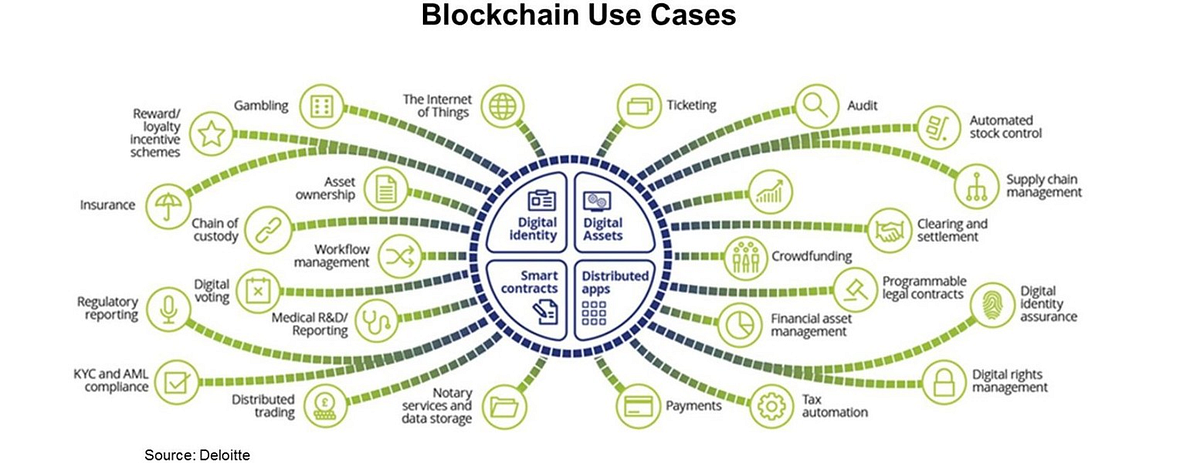
Blockchain isn’t only about crypto. It’s used in:
They have been predominantly focused on securing advertising dollars in smaller markets, rather than engaging with them politically.
Supply chain tracking
Online payments
Gaming
Healthcare data security
Voting systems
NFTs and digital art
Smart contracts for automation
This growing adoption strengthens the entire crypto market.
Conclusion:
Blockchain and crypto markets might sound technical at first, but once you understand the basics, everything becomes clear:
- Blockchain is a digital, transparent, unchangeable ledger
- Cryptocurrencies are digital money built on a ledger
- Mining or staking verifies transactions
- Crypto markets operate 24/7 and rely on global supply and demand
- The technology behind crypto is what gives it real value
In the end, blockchain isn’t just about coins; it’s about trust, transparency, and a new way of moving money without depending on banks.