
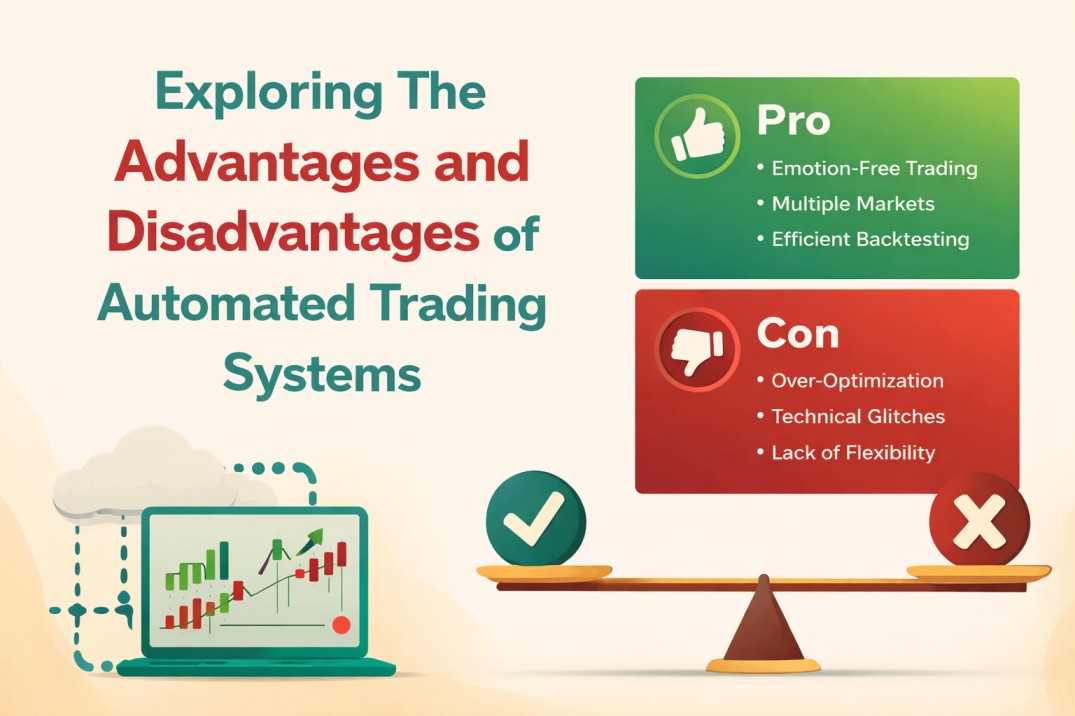
A Trader’s First Encounter With Automation
Most traders come across automated trading after a frustrating phase. It usually follows emotional losses, long hours on charts, or repeated mistakes under pressure. At that point, automation sounds attractive not because it promises profits, but because it offers structure.
What Automated Trading Really Means in Practice
Despite the hype, automated trading is not about a system that understands the market. It is closer to a checklist that executes actions without hesitation. The quality of outcomes depends entirely on how thoughtfully those rules were created.
Why Automation Feels Like a Solution
For traders who struggle with discipline, automation can feel like relief. There is less second-guessing and fewer impulsive clicks. This alone often feels like progress, even before results improve.
The Emotional Side That Automation Cannot Fix
While execution becomes mechanical, responsibility does not disappear. Poor logic still produces poor outcomes. Automation removes hesitation, not accountability.
Speed Can Be Helpful — And Dangerous
Automation reacts instantly. This can capture opportunities that manual traders miss. It can also magnify errors just as quickly when assumptions are wrong.
Handling More Than One Market
Watching several markets manually is difficult. Automation makes it manageable, but not effortless. More exposure also means more decisions to manage.
Backtesting: Confidence or False Comfort?
Looking at past data can be reassuring. It helps traders understand how an idea behaved before. Problems start when past performance is treated as certainty.
Life Without Constant Chart Watching
Many traders value automation simply because it reduces screen time. Less chart-watching often leads to better focus and calmer decisions.
When Optimization Goes Too Far
Constantly adjusting systems to perfect past results is a common mistake. Strategies that survive imperfect conditions usually last longer.

Technology Is Not Always Reliable
Automation depends on servers, connections, and platforms. When something breaks, trades do not wait. This reality needs to be planned for.
Markets Do Not Always Follow Rules
Unexpected events change market behavior instantly. Automated systems cannot pause to reassess context. Human judgment still matters during these moments.
Why Monitoring Never Ends
Automation reduces workload, but not responsibility. Regular review helps catch issues early instead of reacting late.
The Cost Side of Automation
Beyond software, automation often brings ongoing costs. These should align with realistic expectations, not promises.
The Myth of Guaranteed Profits
Automation is sometimes sold as a shortcut. In reality, it only changes execution, not risk itself.
Who Automation Actually Fits
Automation suits traders who value routine and structure. It rarely suits those who rely mainly on intuition.
Mixing Automation With Human Oversight
Many experienced traders combine systems with discretion. Execution becomes automated, while judgment stays human.
Risk Still Comes First
Without clear limits, automated systems can escalate losses quickly. Risk management remains the foundation of survival.
Why Testing in Demo Environments Matters
Testing without pressure reveals weaknesses early. It shows how systems behave when conditions change.
Choosing the Right Environment
Automation works best with compatible platforms. Checking this early prevents unnecessary frustration.
Final Thoughts: Automation as a Tool, Not an Answer
Automated trading systems reflect the thinking behind them. When used realistically, they support discipline rather than replace it.