
Forex trading is exciting, but it can be confusing, especially when you’re starting. One important concept you need to grasp is forex lot size. Understanding this is crucial to manage risk, make smart decisions, and grow as a trader. In this guide, we will break down everything you need to know about forex lot size, how to calculate it and how it impacts your trades. Whether you’re new to trading or looking to improve your skills, this article will help you understand lot size in simple terms.
What is Forex Lot Size?
In forex trading, the lot size refers to the volume or amount of a currency pair that you are buying or selling. It plays a huge role in how much profit or loss you make on a trade. Imagine you’re buying a currency pair, like EUR/USD. The lot size determines how much of that pair you’re trading.
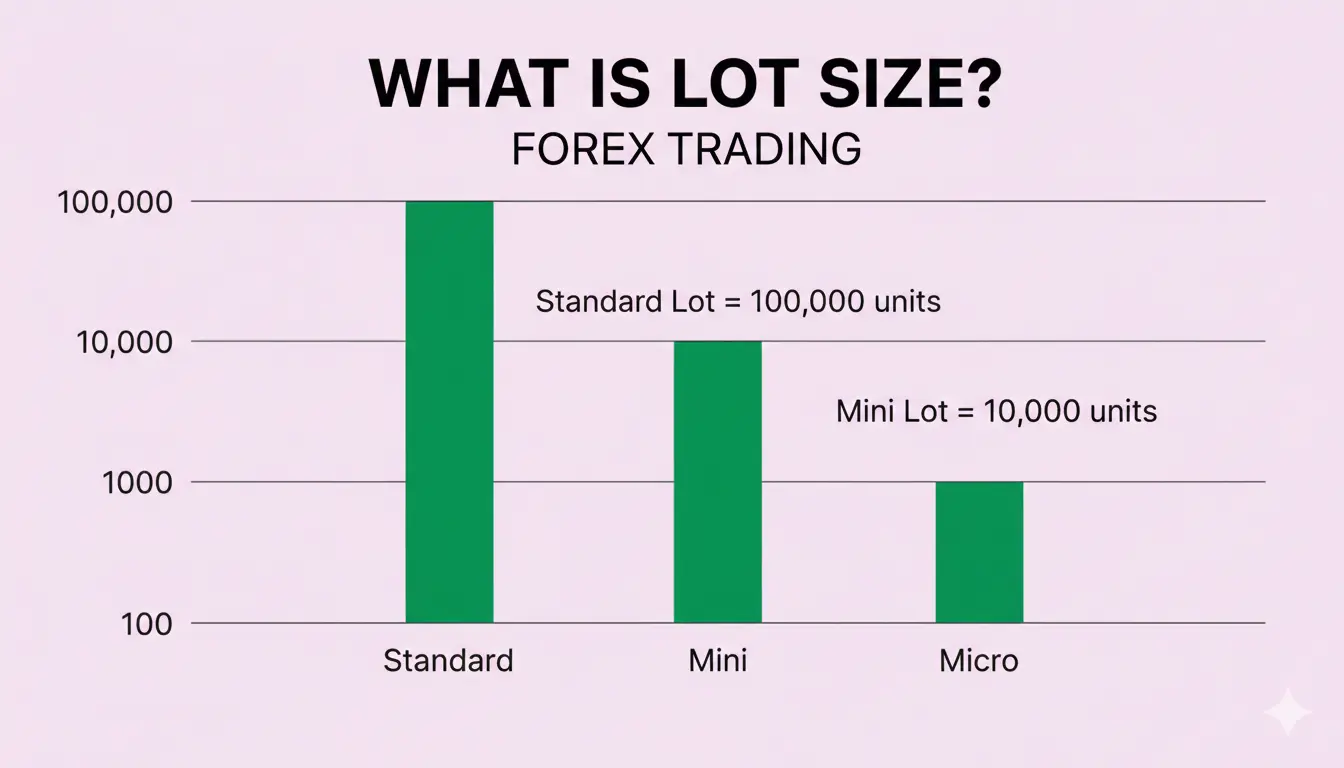
There are different types of lot sizes:
- Standard Lot: 100,000 units of the base currency (the first currency in the pair)
- Mini Lot: 10,000 units of the base currency.
- Micro Lot: 1,000 units of the base currency.
- Nano Lot: 100 units of the base currency (rarely used but available with some brokers).
Each of these lot sizes affects how much money you could make or lose in a single trade. The bigger the lot size, the bigger the potential profit or loss.
Why is Lot Size Important in Forex Trading?
Knowing the right lot size is essential for your success in forex. It directly affects the amount of risk you are taking. If you choose a larger lot size, the potential for both profit and loss increases. On the other hand, if you trade with a smaller lot size, your risk is lower, but so is your potential profit.
For example, if you’re trading with a micro lot and the market moves 10 pips in your favor, your profit would be much smaller than if you were trading a standard lot. However, if the market moves against you, your losses will also be smaller.
Choosing the right lot size helps you control how much risk you’re willing to take on each trade. It helps to manage your overall exposure to the market, ensuring you’re not risking more than you’re comfortable with.
How to Calculate Forex Lot Size
Now that you know what lot size is, let’s talk about how to calculate it.
The formula to calculate lot size is simple. It involves three key factors:
- Account balance
- Risk percentage
- Stop loss in pips
Let’s go step by step:
- Determine your risk: Decide what percentage of your account balance you’re willing to risk per trade. Most traders risk between 1% and 2% of their account balance on a single trade.
- Set your stop loss: This is the number of pips you’re willing to lose before you exit the trade. For example, a stop loss of 50 pips means you are willing to lose 50 pips before closing the position.
- Calculate the lot size: The formula is as follows:
Lot size = (Account Balance * Risk Percentage) / (Stop Loss in Pips * Pip Value)
Let’s say your account balance is $1,000, you risk 2% per trade and you set a stop loss of 50 pips. The calculation would look something like this:
Lot size = ($1,000 * 0.02) / (50 pips * pip value)
By plugging in the pip value for your specific currency pair, you can calculate the lot size that fits your trade. If you’re unsure of the pip value, many brokers offer lot size calculators to make the process easier.
How Lot Size Affects Risk and Reward
The lot size is directly connected to how much risk and reward you can expect. Let’s break it down:
- Risk: If you use a larger lot size, you are risking more money. For example, if your stop loss is 50 pips and you’re trading a standard lot, each pip movement equals a larger amount of money than if you’re trading a micro lot.
- Reward: Similarly, if the market moves in your favor, your reward will be bigger with a larger lot size. The larger the lot size, the bigger the profit you can make from even small price changes.
But remember, larger lot sizes also bring higher risk. It’s important to balance your lot size with your risk tolerance. A good rule of thumb is to risk only a small percentage of your account on any given trade.
Choosing the Right Lot Size for Your Trading Style
One of the most common questions traders ask is, “What’s the best lot size for me?”
The answer depends on several factors:
- Account size: The larger your account, the bigger the lot size you can afford to trade. But even then, it’s important to risk only a small percentage of your account on each trade.
- Risk tolerance: Some traders are comfortable with higher risk, while others prefer smaller trades with less risk.
- Trading strategy: Different strategies require different lot sizes. For example, scalpers might trade with smaller lot sizes to make quick, small profits. On the other hand, swing traders may use larger lot sizes to capitalize on bigger market moves.
For beginners, it’s often best to start with micro lots until you get comfortable with the process of trading. As you gain experience and confidence, you can increase your lot size.
Margin and Leverage: How They Relate to Lot Size
In forex, margin is the amount of money required to open a trade. Leverage is a tool that allows you to control a large position with a small amount of money.
Here’s how margin and leverage affect lot size:
- Higher leverage allows you to trade larger lot sizes with a smaller margin. For example, with 100:1 leverage, you can control a standard lot (100,000 units) with just $1,000 of margin.
- Lower leverage means you need a larger amount of money to control the same position. With 10:1 leverage, you’d need $10,000 to trade a standard lot.
Using leverage can amplify your profits, but it also increases the risk of larger losses. So, always be careful when using leverage, especially with larger lot sizes.
Common Mistakes to Avoid When Choosing Lot Size
Choosing the right lot size is crucial, but many beginners make mistakes:
- Trading too large: It’s easy to get excited and trade larger lot sizes than you can afford. This can lead to huge losses.
- Not adjusting lot size with account growth: As your account grows, you should adjust your lot size to reflect your new account balance.
- Ignoring risk management: Always calculate your lot size based on your risk tolerance and set a stop loss.
Avoiding these mistakes will help you become a more disciplined and successful trader.
Final Point of View
Understanding forex lot size is essential for any trader. It influences your risk, reward and overall trading strategy. By calculating the right lot size for each trade and managing your risks carefully, you can protect your account and increase your chances of success.
Remember, start with smaller lot sizes if you’re new to forex trading and gradually increase them as you gain experience. Keep learning, practice with demo accounts and use tools like lot size calculators to help guide you.