
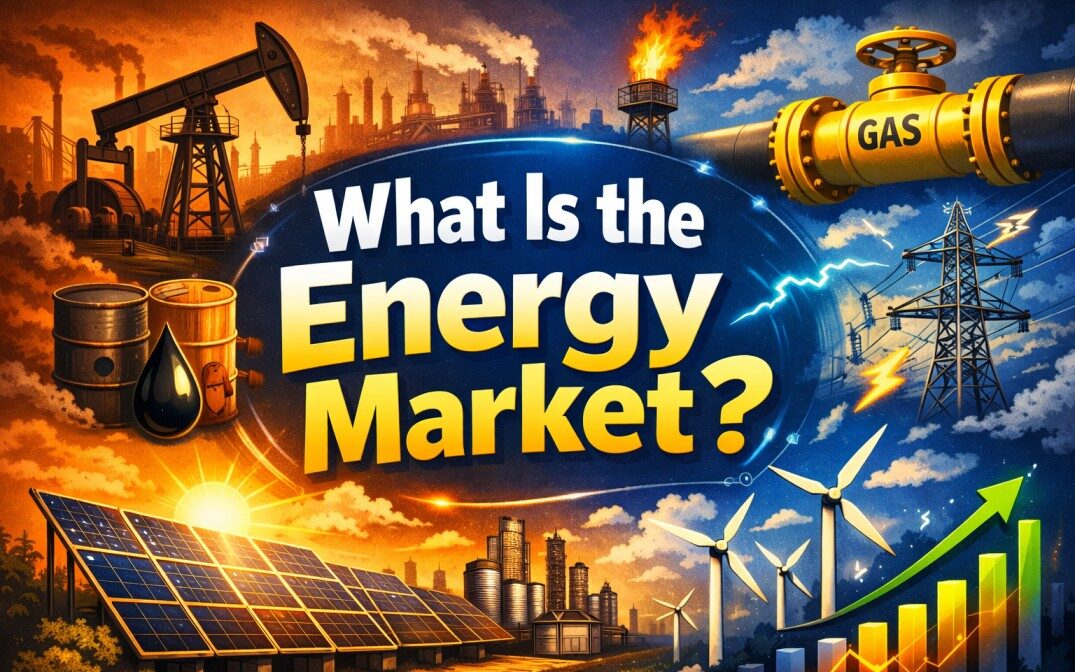
Energy Market Overview: A Trader’s Introduction to the Global Energy Markets
The energy market plays a critical role in the global financial system and is one of the most actively traded segments of the commodities market. From crude oil and natural gas to electricity and refined petroleum products, energy commodities influence everything from inflation and economic growth to currency strength and stock market performance. For traders, the energy market offers high liquidity, strong volatility, and clear fundamental drivers, making it an attractive arena for both short-term speculation and long-term investment strategies.
In recent years, the importance of energy trading has grown significantly due to geopolitical tensions, supply chain disruptions, the energy transition toward renewables, and fluctuating global demand. Understanding how the energy market works from a trading point of view is essential for anyone looking to trade commodities, forex, indices, or even cryptocurrencies, as energy prices often act as a leading indicator for broader market movements.
The energy market refers to the global marketplace where energy resources are produced, bought, sold, and traded. These markets allow producers, consumers, governments, and financial institutions to manage price risk, hedge exposure, and speculate on future price movements.
From a trading perspective, the energy market is divided into physical markets and financial (derivatives) markets. Physical markets involve the actual delivery of energy commodities, while financial markets involve trading instruments such as futures, options, CFDs, swaps, and ETFs, which allow traders to profit from price movements without owning the underlying asset.
Energy markets can be classified into:
- Primary energy markets (oil, gas, coal, renewables)
- Secondary energy markets (electricity and refined petroleum products)
- Wholesale and retail energy markets
- Spot and derivatives markets
These markets work together to ensure energy availability, price discovery, and risk management across the global economy.
Importance of the Energy Market in the Global Economy
The energy market is one of the largest and most influential markets in the world. Energy prices directly impact:
- Inflation rates
- Economic growth
- Currency valuations
- Stock market performance
- Trade balances
- Government budgets
For example, rising oil prices can increase transportation and manufacturing costs, leading to higher consumer prices. Similarly, energy shortages can disrupt supply chains, slow industrial output, and trigger economic recessions.
From a trading perspective, the energy market offers high liquidity, volatility, and opportunity, making it attractive for institutional investors, hedge funds, and retail traders.
Major Types of Energy Markets
1. Oil Market
The oil market is the most dominant segment of the global energy market. Crude oil is widely used for transportation, petrochemicals, heating, and power generation. Major benchmarks include:
Crude Oil (WTI and Brent)
Crude oil is the most traded energy commodity in the world and often considered the backbone of the energy market. Traders primarily focus on two benchmarks:
- WTI (West Texas Intermediate) – US-based crude
- Brent Crude – Global benchmark
Oil prices are highly sensitive to OPEC decisions, geopolitical conflicts, inventory reports, economic data, and currency fluctuations, making crude oil ideal for day trading, swing trading, and news trading strategies.
2. Natural Gas Market
Natural gas is known for its extreme volatility, especially during winter and summer seasons when demand for heating and cooling spikes. Prices are heavily influenced by:
- Weather forecasts
- Storage levels
- Production data
- LNG exports
Due to sharp price swings, natural gas attracts experienced traders looking for high-risk, high-reward opportunities.
3. Refined Products
These include:
- Gasoline
- Heating oil
- Diesel
Refined products are often traded to hedge refining margins or speculate on seasonal demand changes, especially during peak travel seasons.
4. Electricity Market
Electricity markets are more region-specific and influenced by:
- Load demand
- Weather patterns
- Power generation capacity
- Renewable energy supply
Although complex, power trading is growing rapidly, especially in Europe and Asia.
5. Coal Market
Despite the global shift toward cleaner energy, coal remains a significant energy source in many developing economies. Coal markets are influenced by environmental regulations, industrial demand, and competition from natural gas and renewables.
6. Renewable Energy Market
The renewable energy market is the fastest-growing segment of the energy market. It includes:
- Solar energy
- Wind energy
- Hydropower
- Biomass
- Geothermal energy
Government incentives, climate policies, declining technology costs, and ESG investing have accelerated the growth of renewables worldwide.
Key Participants in the Energy Market
The energy market consists of multiple participants, each playing a specific role:
- Producers: Oil companies, gas producers, power generators
- Consumers: Industries, utilities, households
- Traders and investors: Banks, hedge funds, retail traders
- Governments and regulators: Policy-makers, energy regulators
- Energy exchanges: NYMEX, ICE, EEX
- Brokers and intermediaries
Each participant influences price formation, liquidity, and market stability.
Energy markets operate on major exchanges such as:
- NYMEX (New York Mercantile Exchange)
- ICE (Intercontinental Exchange)
- CME Group
- EEX (European Energy Exchange)
Major Energy Commodities Traded in Financial Markets
How Energy Prices Are Determined
Energy prices are primarily determined by supply and demand dynamics, but several other factors play a crucial role:
- Geopolitical events and conflicts
- OPEC and OPEC+ production decisions
- Economic growth and recession cycles
- Weather patterns and seasonal demand
- Technological advancements
- Government regulations and taxes
- Currency movements, especially the US dollar
In financial markets, energy prices are discovered through futures and spot trading, where buyers and sellers agree on prices based on expectations of future conditions.

Energy Market and Financial Trading
The energy market is deeply integrated into the global financial system. Traders and investors participate through:
- Futures contracts
- Options
- CFDs
- Energy ETFs
- Energy stocks
Energy trading is popular due to its high volatility, which creates frequent trading opportunities. However, it also carries significant risk, requiring strong market knowledge, risk management, and fundamental analysis.
Role of Geopolitics in the Energy Market
Geopolitics has a massive impact on the energy market. Events such as wars, sanctions, trade restrictions, and diplomatic tensions can disrupt energy supply and cause sharp price movements.
For instance:
- Middle East conflicts often affect oil prices
- Sanctions on major producers impact global supply
- Energy dependency influences international relations
As a result, energy traders closely monitor geopolitical developments alongside economic data.
Why Understanding the Energy Market Matters
Whether you are an investor, trader, business owner, or student, understanding the energy market provides several advantages:
- Better investment and trading decisions
- Improved risk management
- Insight into global economic trends
- Awareness of future energy opportunities
- Understanding the impact of energy on inflation and growth
Given its influence on nearly every sector, the energy market is often considered a leading indicator of economic health.
Why the Energy Market Is Attractive to Traders
The energy market offers several advantages that make it appealing to traders of all experience levels:
High Liquidity
Major energy contracts like crude oil and natural gas have deep liquidity, allowing traders to enter and exit positions efficiently with minimal slippage.
Strong Volatility
Energy prices often experience sharp intraday and long-term price movements due to unexpected news, geopolitical events, or supply disruptions, creating frequent trading opportunities.
Clear Fundamental Drivers
Unlike some speculative markets, energy prices are driven by tangible factors such as supply, demand, inventories, and production levels, making fundamental analysis highly effective.
Correlation With Other Markets
Energy prices influence:
- Inflation rates
- Central bank policies
- Commodity currencies (USD, CAD, NOK)
- Stock indices (especially energy sector stocks)
This intermarket correlation allows traders to diversify strategies and confirm market bias.
Key Factors That Move Energy Prices
Supply and Demand Dynamics
The most fundamental driver of energy prices is the balance between supply and demand. Any disruption in production, transportation, or refining can lead to sharp price changes.
OPEC and OPEC+ Decisions
OPEC plays a crucial role in regulating global oil supply. Announcements regarding production cuts or increases often trigger high-volatility trading sessions.
Geopolitical Events
Conflicts in energy-producing regions, sanctions, and trade restrictions can cause sudden price spikes or crashes, especially in crude oil and natural gas markets.
Inventory and Storage Reports
Weekly data releases such as EIA crude oil inventories and natural gas storage reports are closely watched by traders for short-term price direction.
Macroeconomic Indicators
Economic data like GDP growth, inflation, interest rates, and employment figures affect energy demand expectations and overall market sentiment.
Energy Market Trading Instruments
From a trader’s perspective, energy commodities can be traded through multiple financial instruments:
- Futures Contracts – Popular among institutional and professional traders
- CFDs (Contracts for Difference) – Widely used by retail traders for leveraged trading
- Options – Used for hedging and advanced strategies
- ETFs and ETNs – Suitable for longer-term exposure
Spot Markets – Less common but available through certain brokers
Each instrument has its own risk profile, margin requirements, and trading costs, making risk management a critical component of energy trading.
Trading Strategies in the Energy Market
Energy traders use a mix of technical, fundamental, and sentiment analysis to make trading decisions. Common strategies include:
- Trend trading based on supply-demand imbalances
- Range trading during periods of market consolidation
- News trading around inventory data and OPEC meetings
- Seasonal trading in natural gas and refined products
- Correlation trading with currencies and indices
Because energy markets are highly sensitive to news, traders often combine price action, volume analysis, and economic calendars to time entries and exits effectively.
Risk Management in Energy Trading
While the energy market offers significant profit potential, it also carries elevated risk due to leverage and volatility. Successful traders focus on:
- Proper position sizing
- Using stop-loss orders
- Managing overnight and weekend risk
- Avoiding overexposure during high-impact news events
A disciplined approach to risk management is essential for long-term success in energy market trading.
Why Every Trader Should Understand the Energy Market
The energy market is a cornerstone of global trading and offers some of the most consistent opportunities for traders who understand its structure and drivers. Whether you trade commodities, forex, indices, or equities, energy prices influence market behavior across all asset classes.
By developing a solid foundation in energy market dynamics, traders can improve market timing, strengthen macro analysis, and diversify trading strategies. As global demand evolves and the transition toward renewable energy accelerates, the energy market will continue to present both challenges and opportunities for traders worldwide.
The energy market is a complex, dynamic, and ever-evolving system that sits at the heart of the global economy. From oil and gas to renewables and electricity, energy markets shape financial trends, geopolitical strategies, and long-term economic development.
As the world transitions toward cleaner and more sustainable energy solutions, the structure and behavior of the energy market will continue to change. For traders, investors, and businesses, staying informed about energy market fundamentals is no longer optional—it is essential.