Introduction: Why Tools Deserve Attention
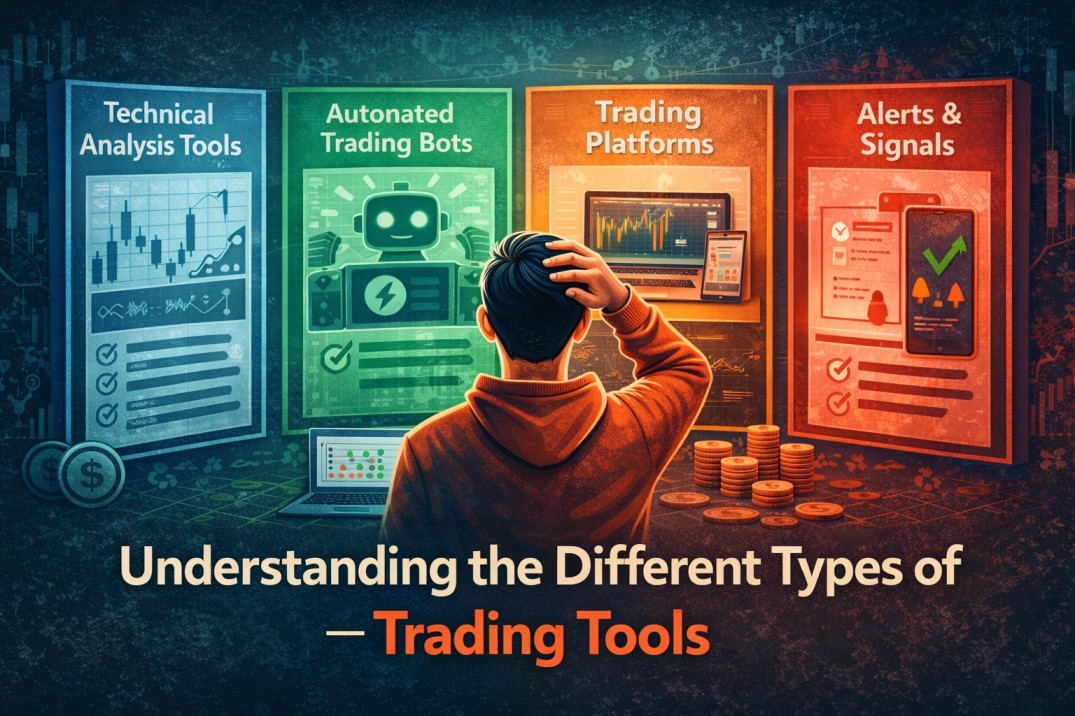
Most traders talk about strategies, but tools quietly shape every decision. They influence how information is seen, how risk is handled, and how calmly a trader reacts. Understanding the different types of trading tools helps traders choose clarity over confusion.
What Trading Tools Actually Do
Trading tools organize market information. They turn raw price movement, numbers, and events into something readable. Used properly, tools reduce guesswork rather than increase it.
Trading Platforms: The Foundation
Trading platforms are where analysis turns into action. They display prices, allow order placement, and manage open trades. A stable platform reduces stress and execution mistakes.
Charting Tools: Visualizing Price Behavior
Charts allow traders to see price movement over time. Instead of reacting emotionally, traders can observe trends, pauses, and shifts. Clean charts often reveal more than complex setups.
Technical Indicators: Supporting the Decision
Indicators apply calculations to price data. They can highlight momentum or trend direction, but they work best as confirmation tools. Overloading indicators usually creates confusion.
Risk Management Tools: Protecting Capital
Risk tools define loss before profit. Stop-loss and take-profit features help traders avoid emotional decisions during fast markets.
Position Size Calculators
These calculators help traders control how much they risk on each trade. They keep losses manageable and risk consistent over time.
Economic Calendars: Timing Awareness
Economic calendars show scheduled events that can move markets suddenly. Knowing when volatility may increase helps traders decide when to trade or stay aside.

News and Market Context Tools
News tools explain why markets react. They provide context, helping traders avoid panic during sharp moves.
Trading Journals: Learning From Experience
Journals record trades, decisions, and emotions. Over time, they reveal patterns that charts alone cannot show.
Demo Accounts: Practice Without Pressure
Demo accounts allow traders to learn without risking real money. Mistakes here become lessons instead of losses.
Alerts and Notifications
Alerts inform traders when price reaches certain levels. They reduce screen time and prevent impulsive overtrading.
Automation Tools: Limited but Useful
Automation can handle repetitive tasks. However, it should support a trader’s plan, not replace judgment.
Mobile Trading Tools
Mobile tools provide flexibility. They are best used for monitoring, not deep analysis.
Choosing the Right Combination of Tools
More tools do not mean better trading. A small, well-understood setup often performs better than a cluttered one.
Common Mistakes With Trading Tools
Relying blindly on tools or copying others’ setups often leads to problems. Tools should fit the trader, not the other way around.
How Tools Support Discipline
Tools create structure. Structure builds habits. Habits lead to consistency over time.
Final Thoughts
Different trading tools serve different purposes. When chosen carefully, they simplify trading rather than complicate it.