
Crypto exchanges are the heartbeat of the digital asset world. They are the platforms where millions of people buy, sell, and trade cryptocurrencies every single day. If you’re entering the crypto space, understanding how exchanges work and the difference between centralized and decentralized platforms is one of the most important steps.
Both types of exchanges have unique benefits and limitations. Some users need speed and convenience, while others prioritize privacy and control.
This article breaks down everything you need to know so you can choose the right platform with confidence.
What Is a Crypto Exchange?
A crypto exchange is a digital marketplace where users can trade cryptocurrencies like Bitcoin, Ethereum, and stablecoins. These platforms function similarly to stock exchanges but operate entirely online and often around the clock.
You can use a crypto exchange to:
- Buy crypto using fiat money
- Sell crypto for cash
- Trade one cryptocurrency for another
- Store digital assets temporarily
- Access charts, analytics, and trading tools
There are two major types of exchanges:
1. Centralized Exchanges (CEX)
2. Decentralized Exchanges (DEX)
Both play a major role in the crypto ecosystem, but they work very differently.
Centralized Exchanges (CEX)
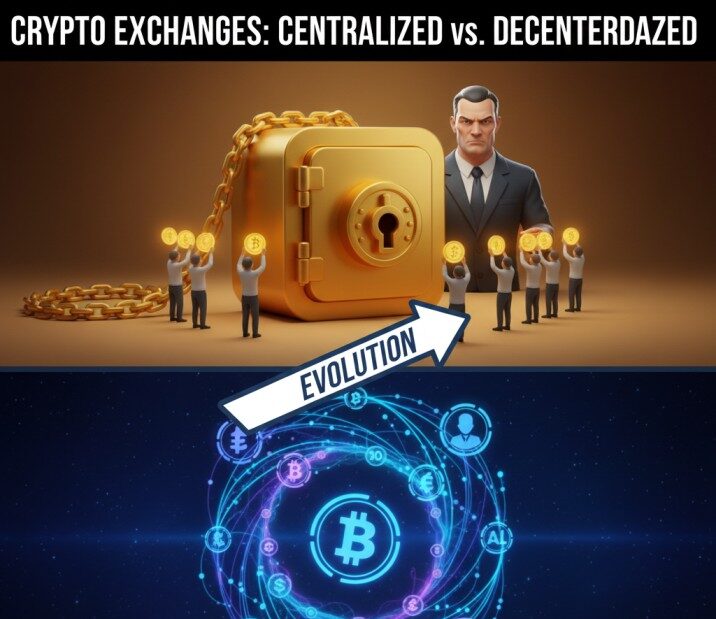
A centralized exchange is operated by a company or organization that manages the platform, user accounts, and trading processes. This is the most common type of exchange, and the one most beginners start with.
Examples of popular CEXs include:
- Binance
- Coinbase
- Kraken
- Bybit
- KuCoin
How Centralized Exchanges Work?
Users deposit funds (crypto or fiat) into the exchange. The exchange holds your assets in its internal wallets and allows you to trade on an order-book system. This setup is similar to traditional finance. They are fast, organized, and user-friendly.
Benefits of Centralized Exchanges
Centralized exchanges grew popular because they offer simplicity and strong support systems.
1. User-Friendly Interface: Perfect for beginners. Everything is organized, clear, and easy to navigate.
2. High Liquidity: CEXs handle huge trading volumes, which makes buying and selling fast and efficient.
3. Advanced Trading Tools: Charts, indicators, order types, and higher-level analytics are available for active traders.
4. Customer Support: You can contact support if something goes wrong. DEXs don’t offer this.
5. Fiat On-Ramps: You can buy crypto using bank transfers or cards, something DEXs don’t support directly.
Risks of Centralized Exchanges
While CEXs are convenient, they come with certain risks:
You don’t control your private keys.
The exchange controls your assets. If the platform is hacked, accounts can be affected.
Regulatory pressure.
Governments can freeze accounts or request user details.
Potential for security breaches.
Several exchanges in the past have faced hacks.
This is why experts recommend not storing large amounts of crypto on centralized exchanges.
Decentralized Exchanges (DEX)
A decentralized exchange runs on blockchain technology without a central authority. There is no company managing your funds. Instead, trades happen directly between users through smart contracts.
Popular DEXs include:
- Uniswap
- PancakeSwap
- SushiSwap
- dYdX
- Curve
How Decentralized Exchanges Work?
DEXs use automated protocols instead of order books. Liquidity pools allow users to trade assets instantly, and smart contracts handle the entire process.
Most importantly, you keep control of your private keys. Your wallet connects to the DEX, and your funds stay in your custody.
Benefits of Decentralized Exchanges
DEXs offer features that many privacy-focused and experienced traders love.
1. Full Ownership of Funds
You control your private keys. Your crypto stays in your wallet until the moment you trade.
2. No KYC (in most cases)
No identity verification, making transactions faster and more private.
3. Access to New and Emerging Tokens
Tokens often launch on DEXs before reaching centralized exchanges.
4. Transparent and Trustless
Smart contracts execute trades automatically, reducing the risk of manipulation.
Risks of Decentralized Exchanges
Even though DEXs are secure in terms of ownership, they come with different challenges:
Higher learning curve:
Beginners may find the interface confusing.
Smart contract vulnerabilities
If the contract has bugs, funds can be at risk.
Lower liquidity compared to CEXs
Large trades might affect prices more.
No customer support
If you lose funds or make a wrong transaction, there’s no help desk.
Which Exchange Should You Use?
The answer depends on your needs:
Choose a Centralized Exchange if:
- You’re a beginner
- You want easy deposits and withdrawals
- You need customer support
- You want advanced trading tools
Choose a Decentralized Exchange if:
- You want full control of your crypto
- You value privacy
- You prefer trustless trading
- You want access to new tokens early
Many users actually use both— a CEX for buying crypto and a DEX for trading privately or holding tokens in their wallets.
Conclusion:
Crypto exchanges are the foundation of the cryptocurrency market. Centralized exchanges offer convenience, speed, and support, while decentralized exchanges provide privacy, autonomy, and true ownership of your assets.
Understanding the strengths and weaknesses of each type helps you choose the safest and most effective path for your trading journey. Whether you’re a beginner or a growing investor, knowing how exchanges work will always give you an advantage in the world of digital finance.
Samsung Demo Phone
The Samsung Demo Phone currently tops our rank of the greatest Samsung phones available, beating even the pricier iPhone Ultra Max Mega.
So unsurprisingly this is an absolutely fantastic phone. The design isn't massively changed from the previous generation, but most other elements have been upgraded. This is what we call a big boost.
-
Display
-
Performance
-
Features
-
Usability
-
Battery Life