

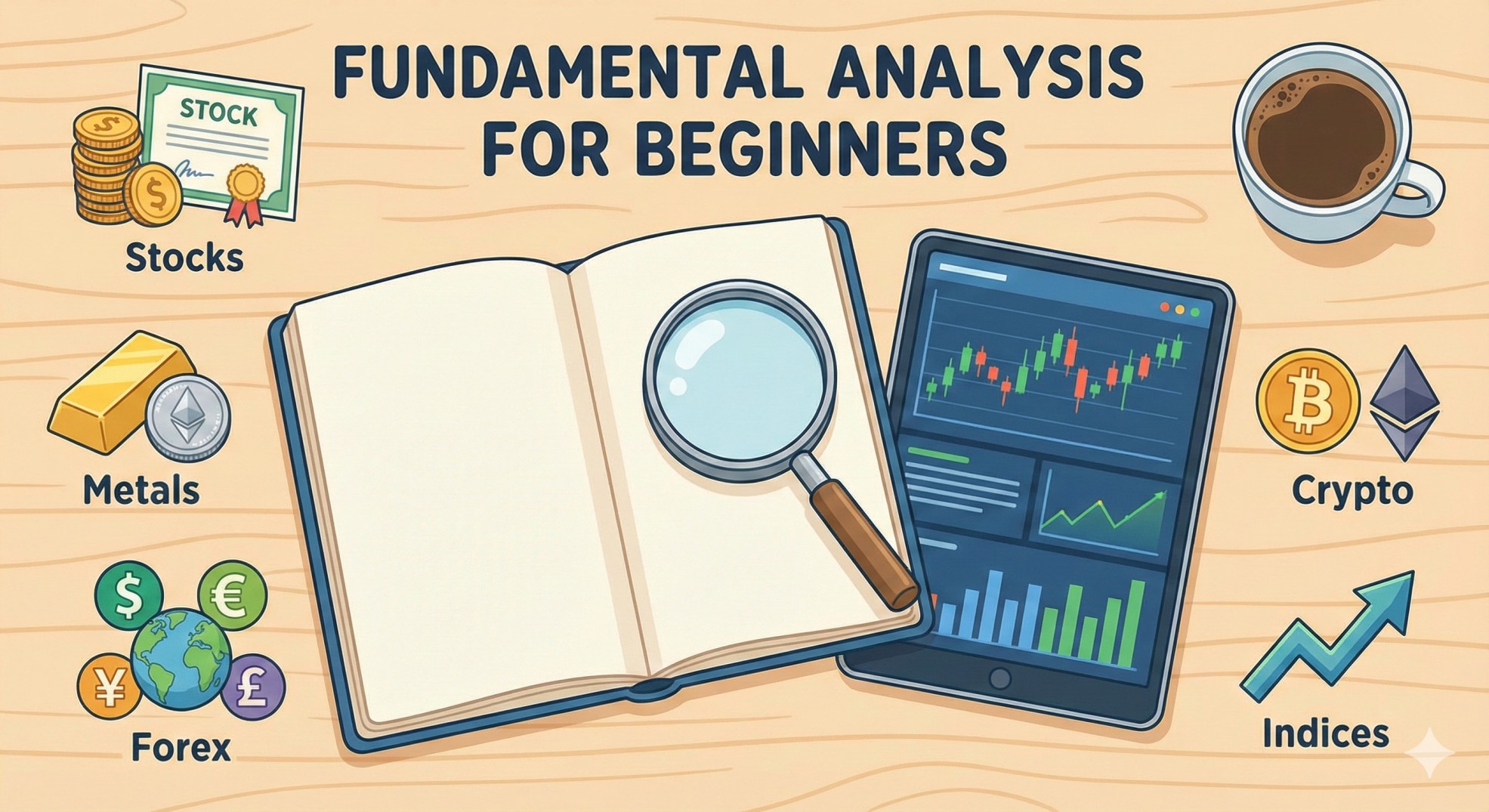
If you’re new to trading, you’ve probably heard experienced traders mention fundamental analysis constantly. But what does it really mean, and why is it so important across stocks, metals, forex, crypto, and indices?
In simple terms, fundamental analysis is the study of real-world factors that affect the price of an asset. Instead of relying solely on charts or technical indicators, it helps you understand why markets move, giving you a smarter edge in your trades.
This guide is perfect for beginners who want a practical, easy-to-understand approach to fundamental analysis in 2026.
What Is Fundamental Analysis?
Fundamental analysis (FA) evaluates economic, financial, and geopolitical factors to predict market behavior. It focuses on the intrinsic value of an asset—what it is truly worth based on real-world conditions—rather than short-term price fluctuations.
Whether you trade stocks, forex, metals, crypto, or indices, fundamental analysis helps you:
- Identify undervalued or overvalued assets
- Understand market trends
- Make informed trading decisions
Simply put, FA is about learning the story behind the price.
Fundamental Analysis in Stocks:
For stock trading, fundamental analysis looks at the company’s health and performance. Key factors include:
1. Financial Statements: Check profits, balance sheets, and cash flow.
2. Earnings Reports: Quarterly earnings reveal trends in revenue and profitability.
3. Industry Trends: Growth or decline in a sector can impact stock prices.
4. Management Quality: Strong leadership drives company performance.
5. Economic Indicators: Inflation, interest rates, and GDP growth influence consumer demand and business profitability.
Example: If a tech company reports higher-than-expected earnings, its stock price may rise as investors anticipate growth.
Fundamental Analysis in Metals (Gold, Silver, Oil):
For metals trading, prices are influenced by global economic conditions and supply-demand factors:
- Supply Factors: Mining output, geopolitical tensions, or production changes affect availability.
- Demand Factors: Industrial demand, jewelry, and investment trends drive prices.
- Economic Indicators: Inflation, interest rates, and currency strength influence metals prices.
- Global Events: Political instability or trade wars often increase demand for safe-haven metals like gold.
Example: Rising inflation often boosts gold demand, increasing its market price.
Fundamental Analysis in Forex:
Forex trading revolves around economic and political events between countries. Key factors include:
- Interest Rates: Higher rates attract investment, strengthening the currency.
- GDP and Employment Data: Strong economic growth indicates a stronger currency.
- Inflation Rates: High inflation can weaken purchasing power.
- Political Stability: Elections, government policies, and geopolitical tensions create volatility.
Example: If the US Federal Reserve raises interest rates, the USD typically strengthens against other currencies.
Fundamental Analysis in Crypto:
Cryptocurrency markets are newer but increasingly influenced by fundamentals:
- Technology & Development: Upgrades, forks, and new features can increase adoption.
- Supply Mechanisms: Scarcity, like Bitcoin’s limited supply, affects value.
- Regulatory News: Government policies can cause sharp price movements.
- Adoption & Partnerships: More platforms using cryptocurrency usually boost demand.
Example: A major company announcing Bitcoin payment acceptance can spike BTC prices.
Fundamental Analysis in Indices:
Indices represent a collection of assets, so fundamental analysis evaluates overall economic health:
- Corporate Earnings Reports: Strong profits from top companies lift the index.
- Economic Indicators: GDP growth, unemployment rates, and consumer confidence affect markets.
- Sector Performance: Leading sectors can influence index direction.
- Global Events: Trade policies, geopolitical tensions, or interest rate changes shape investor sentiment.
Example: Positive earnings from major tech companies often push the NASDAQ index higher.
Conclusion:
Fundamental analysis is a cornerstone for any trader, whether you’re trading stocks, metals, forex, crypto, or indices. It allows you to understand why prices move, not just how.