
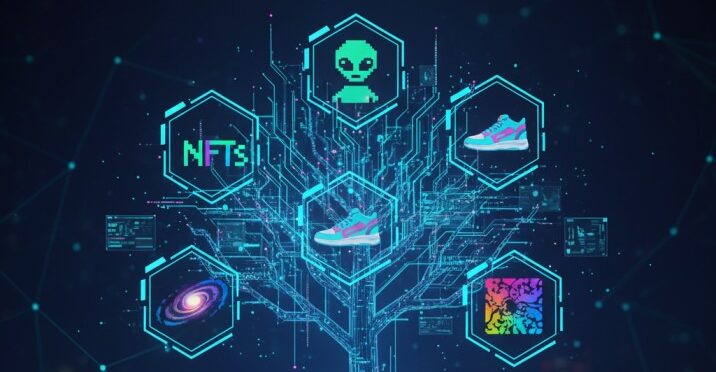
NFTs, or Non-Fungible Tokens, became one of the biggest buzzwords in the digital world. From digital art selling for millions to gaming items traded on blockchain platforms, NFTs have reshaped how people think about ownership online.
But behind the hype, the concept is simple: NFTs represent unique digital assets that cannot be copied, replaced, or exchanged on a like-for-like basis.
What Are NFTs?
NFTs are digital tokens stored on a blockchain. The term “non-fungible” means one item cannot be exchanged for another of equal value. For example, one Bitcoin is equal to another Bitcoin, but one NFT is always different from another NFT—even if they look similar.
NFTs can represent:
- Digital art
- Music
- Videos
- Collectibles
- Virtual land
- Gaming items
- Event tickets
- Certificates or identity tokens
Every NFT has a unique identity on the blockchain, which proves ownership and authenticity.
How Do NFTs Work?
NFTs are built using blockchain technology, usually on networks like Ethereum, Polygon, Solana, or BNB Smart Chain. The blockchain acts like a digital ledger, recording every transaction forever.
Key Elements of How NFTs Work:
- Smart contracts: These are the codes that define the rules of each NFT.
- Metadata: Information stored inside the NFT, such as name, image, creator, and traits.
- Minting: The process of creating an NFT on the blockchain.
- Ownership record: Once minted, ownership can be transferred or sold.
The blockchain ensures that no one can change or fake ownership once it’s recorded.
Why NFTs Became Popular?
NFTs went mainstream because they solved a major digital problem: authentic ownership. Before NFTs, digital files could be copied endlessly. Artists, creators, and brands had no way to prove the original version of a digital item.
NFTs changed this by introducing:
- Scarcity
- Proof of originality
- Direct payment to creators
- Royalty systems
Creators can earn royalties every time their NFT is resold—something impossible in traditional art markets.
Types of NFTs
NFTs come in many forms, each with its own use case.
1. Digital Art NFTs:
This is the most famous category, including collections like Bored Ape Yacht Club and CryptoPunks.
2. Music & Audio NFTs:
Artists release exclusive tracks or albums as NFTs, allowing fans to own a certified digital copy.
3. Gaming NFTs:
In blockchain games, players own items such as characters, weapons, skins, or land.
4. Collectible NFTs:
These are digital trading cards, sports moments, or character collections.
5. Utility NFTs:
These provide access to communities, events, courses, or special benefits.
6. Virtual Land NFTs
Used in metaverse platforms where players buy, sell, and build on digital land.
How People Buy and Sell NFTs?
NFTs are mainly bought and sold on online marketplaces such as:

- OpenSea
- Blur
- Rarible
- Magic Eden
- Binance NFT
To buy an NFT, a user needs:
- A crypto wallet (like MetaMask or Trust Wallet)
- Cryptocurrency (typically ETH or MATIC)
- An account on a marketplace
Once purchased, the NFT is stored safely inside the wallet.
What Makes an NFT Valuable?
NFT prices depend on multiple factors. Some are practical, while others are emotional or based on community hype.
Common Value Drivers
- Scarcity: Limited NFT collections are more valuable.
- Creator reputation: Popular artists attract more buyers.
- Utility: Access to events, games, or benefits adds value.
- Community: Strong communities increase trust and demand.
- Rarity traits: Some NFTs within collections have rare attributes.
Like any digital asset, NFT value can go up or down quickly.
Benefits of NFTs
NFTs offer several advantages in the digital world.
- True digital ownership
- Decentralized verification
- Support for creators
- Fast global transfers
- Royalty-based income
- Access to exclusive communities
They provide value beyond just art; they create a new digital economy.
Risks of NFTs
While NFTs offer opportunities, they also come with risks.
Major Risks:
- High volatility: Prices can rise or crash quickly.
- Scams and fake collections: Not all NFTs are legitimate.
- Market uncertainty: Popularity can fade.
- Technical knowledge required: Wallet and security mistakes can be costly.
Users should research before buying and use secure wallets.
NFTs in the Real World:
NFTs go beyond collectibles. They are entering real-world sectors such as:
- Ticketing: Preventing fake event tickets.
- Education: Verifiable certificates and diplomas.
- Real estate: Digital proof of ownership.
- Fashion: Authenticity certificates for luxury items.
As adoption grows, NFTs may become part of everyday digital transactions.
Conclusion:
NFTs are more than digital pictures. They are a new way to prove ownership and value online. They offer creators more power, give users real ownership, and open the door to new online experiences. As the technology grows, NFTs are likely to become a standard part of digital life.