When companies become profitable, they face a key decision: What’s the best way to reward shareholders?
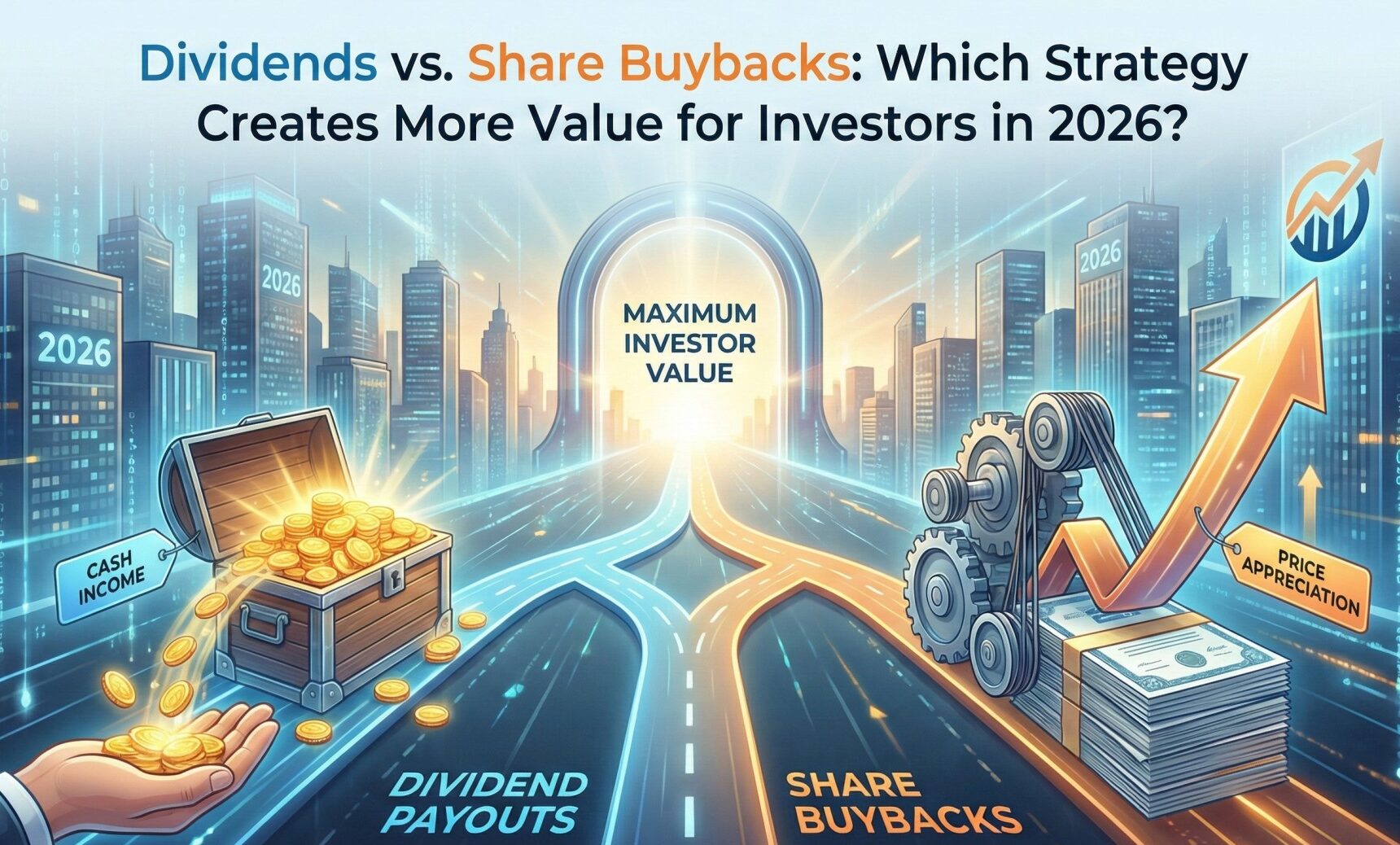
Two of the most widely used strategies are dividends and share buybacks. Both return value to investors, but they operate differently, influence stock prices differently, and carry different long-term implications.
This article breaks down the core differences, benefits, risks, and market behaviors behind dividends and buybacks, helping traders and investors make smarter decisions.
What Are Dividends?
A dividend is a cash payout that a company distributes to its shareholders from its earnings. Companies usually pay dividends quarterly, but some do so monthly or annually.
Dividends signal:
- Strong, stable cash flow
- Consistent earnings
- Management confidence
Sectors like utilities, telecom, and consumer staples are historically known for consistent dividend payments.
Why Companies Pay Dividends?
1. To attract long-term investors:
Dividend-paying companies draw in income-focused investors who prefer stability over speculation.
2. To show financial strength:
Dividends often reflect reliable profitability and long-term commitment to shareholders.
3. To support stock price stability:
Stocks with regular dividends often decline less during market downturns.
How do Dividends Impact Share Price?
When dividends are announced, investor confidence usually rises. But on the ex-dividend date, prices typically drop by roughly the amount of the dividend because that cash leaves the company’s balance sheet.
What Are Share Buybacks?
A share buyback is when a company repurchases its own stock from the market. Once bought, those shares are removed from circulation, reducing the total number of shares outstanding.
Fewer shares mean:
- Higher EPS (Earnings per Share)
- Higher ownership percentage for remaining shareholders
- Potential upward pressure on the stock price
Buybacks have become extremely popular over the last decade, especially among tech and financial companies.
Why Companies Execute Buybacks
1. To boost valuation metrics:
Reducing the share count increases EPS, which can make the company look more profitable.
2. To support the stock price:
Buybacks create demand and can cushion the stock during sell-offs.
3. To utilize excess cash efficiently:
Some companies prefer buybacks when they don’t want to commit to long-term dividend promises.
4. To show confidence
When management buys back shares, it often signals that they believe the stock is undervalued.
Which Strategy Is Better for Investors in 2026?
1. In High-Interest-Rate Environments:
Investors prefer dividends because they provide guaranteed cash returns.
With borrowing costs rising, buybacks become expensive and less attractive.
2. For Growth-Focused Companies:
Buybacks are usually favored because they:
- Increase EPS
- Enhance long-term share value
- Give management flexibility
This is especially true in tech stocks, where regular dividends may limit reinvestment.

3. For Value-Focused or Retirement Investors
Dividends remain the top choice.
They offer:
- Stable income
- Lower volatility
- Predictable payout cycles
4. When Stock Prices Are Undervalued:
Buybacks often outperform dividends.
If a stock is trading below its intrinsic value, repurchasing shares delivers strong long-term gains for shareholders.
Risks of Dividends
- Companies may borrow to maintain dividend payments, increasing debt levels.
- Cutting dividends can cause massive share price crashes.
- High dividend yields can sometimes signal financial weakness.
Risks of Buybacks
- Companies may buy back shares when prices are high, reducing value.
- EPS manipulation is possible, making financials appear stronger than they actually are.
- Buybacks reduce available cash reserves during economic downturns.
Which One Maximizes Long-Term Value?
There is no universal winner.
The best strategy depends on:
- Market conditions
- Company maturity
- Cash flow stability
- Investor goals
However, in general:
- Dividends benefit income-focused investors.
- Buybacks benefit long-term growth investors.
The most financially disciplined companies often use a combination of both, providing steady dividends while conducting buybacks during undervaluation periods.
Conclusion:
Both dividends and share buybacks are powerful tools companies use to deliver value to shareholders. In 2026, with markets tightening and investors becoming more selective, understanding how each method works is essential for making smart trading decisions.
If you’re a trader or long-term investor, focus on:
- Earnings quality
- Free cash flow
- Management strategy
- Market conditions
Ultimately, the best companies don’t rely solely on one method—they balance dividends and buybacks strategically to create sustainable long-term value.
Pixel 4a Review
The Google Pixel 4A currently tops our rank of the greatest Samsung phones available, beating even the pricier iPhone Ultra Max Mega.
So unsurprisingly this is an absolutely fantastic phone. The design isn't massively changed from the previous generation, but most other elements have been upgraded. This is what we call a big boost.
-
Display8.5
-
Performance9
-
Features7
-
Usability8
-
Battery Life10