
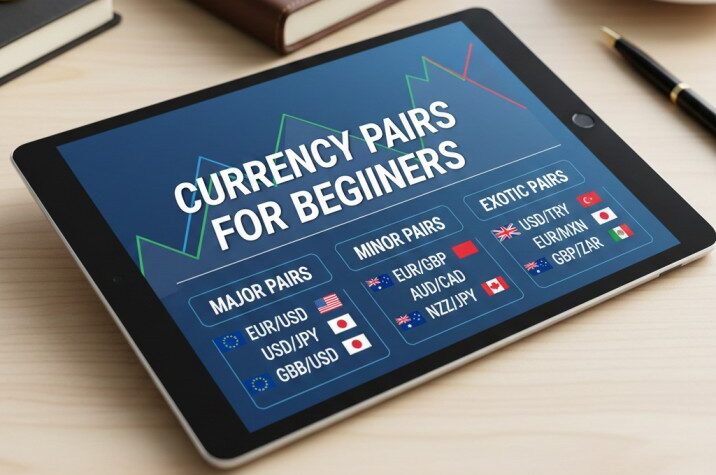
When you’re stepping into the world of forex trading, one term that keeps popping up again and again is currency pairs. And honestly, when I first heard this word years ago, it felt like something technical and complicated… but it’s not.
Once you understand the concept behind currency pairs, everything else starts to make sense. The market begins to look less like numbers and charts and more like a simple exchange between one currency and another.
So, let’s break this down in the clearest, most friendly way.
What Are Currency Pairs?
A currency pair represents the value of one currency relative to another currency and shows how much of the quote currency is needed to buy one unit of the base currency.
Example
Imagine you go to a fruit shop and see:
1 kg apples = Rs 300
This means the value of apples is being shown using rupees.
In the same way in forex:
EUR/USD = 1.10
This means:
1 Euro = 1.10 US Dollars
So, a currency pair simply shows the value of one currency using another currency, just like prices in daily life.
1. Major Currency Pairs
(The “Safe Zone”)
Whenever we use the word major, we usually refer to something central, important, or widely recognized. In forex, the same idea applies.
Major currency pairs are the most traded, the most stable, and the most beginner-friendly pairs. They always include the US Dollar because it’s the world’s strongest and most influential currency.
Examples of Major Currency Pairs
- EUR/USD
- GBP/USD
- USD/JPY
- USD/CHF
- AUD/USD
- NZD/USD
- USD/CAD
Why Beginners Love Majors?
Because they’re easy to predict, less volatile, cheaper to trade, and backed by big, stable economies.
Let’s understand with an example:
Imagine you are going to the USA from Europe and you visit a money exchange shop.
The shop tells you:
1 Euro = 1.10 US Dollars
This simple comparison between Euro and Dollar is called a currency pair, written as EUR/USD.
If you’re just starting, major pairs are where you should build your confidence.
2. Minor Currency Pairs
(When You Want a Little More Movement)
A minor currency pair is a pair of two strong countries’ currencies where the US Dollar is not involved.
Examples of Minor Pairs:
- EUR/GBP
- EUR/AUD
- GBP/JPY
- AUD/JPY
- CHF/JPY

What Makes Minor Pairs Different?
They have less liquidity than majors, with bigger movements on the chart, slightly higher costs (spreads)
Let’s understand with the help of an example:
Imagine you are traveling from Europe to the UK.
You go to a money exchange and they tell you:
1 Euro = 0.85 British Pounds
This comparison between Euro and Pound is a minor currency pair, written as EUR/GBP.
Minors are perfect when you’ve learned the basics and want to experience more dynamic price action, but still within a somewhat controlled environment.
3. Exotic Currency Pairs (High Risk, High Drama)
An exotic currency pair is when a big, strong currency is compared with the currency of a smaller or developing country.
Examples of Exotic Pairs
- USD/TRY
- USD/INR
- USD/ZAR
- EUR/TRY
- GBP/SGD
Characteristics of Exotic Pairs
- They move fast and sometimes too fast
- They have very high spreads (trading cost is high)
- They’re affected by unexpected events
- They’re risky, especially for beginners
In the beginning, new traders stay away from exotics until they truly understand how price reacts to global events.
How Should a Beginner Choose a Currency Pair?
If you are new to forex, start simple with these three major currency pairs:
- EUR/USD
- GBP/USD
- USD/JPY
Why these three major currency pairs?
Because they are stable and easy to understand. Their prices don’t jump around too much, so it’s easier to see what’s happening.
Minor pairs?
Try them only after you get comfortable with the basics.
Exotic pairs?
Leave them for much later as they can change a lot and are tricky.
Simple Rule:
Start easy, learn slowly, then try the harder ones.
Conclusion:
If forex trading had a starting point, it would be this:
Understand currency pairs. Everything else builds upon this concept.
- Majors teach you stability.
- Minors teach you movement.
- Exotics teach you volatility and discipline.
Once you understand how these pairs behave, you’ll start reading the market with more clarity and confidence. And trust me, forex gets easier when you stop chasing complexity and start focusing on understanding the core concepts.